
Why American Trucks Look So Different from European Ones
A Story of Regulation, Geography, and the Reality of Living on the Road

At a glance, the difference feels almost theatrical.
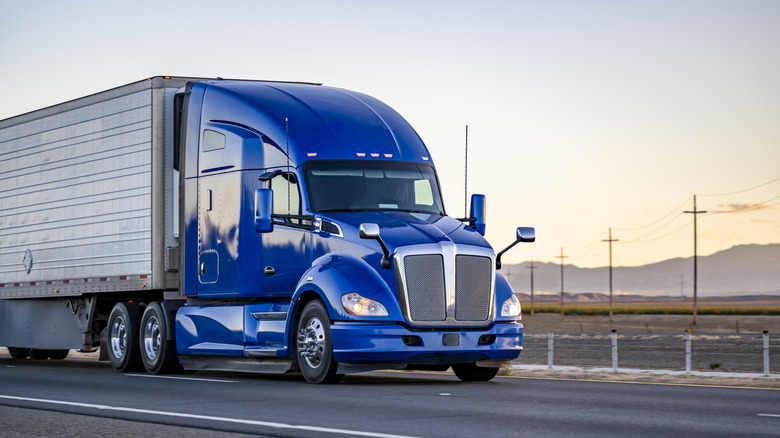
An American semi truck stretches forward with a long hood, its cab set far back like the bridge of a ship. It looks built for distance — not just to move freight, but to occupy space.
In Europe, trucks tell a different story. Flat-faced, upright, compact. They look purposeful, almost compressed, as if shaped by invisible hands pushing them inward.
This contrast isn’t accidental.
And it isn’t about aesthetics.
It’s the outcome of two continents answering the same logistical question under radically different constraints.
The Invisible Hand of Regulation
Truck design rarely begins with designers.
It begins with lawmakers.
In Europe, regulation focuses on total vehicle length. Tractor and trailer together must remain within strict limits. This single rule quietly dictates everything that follows. If cargo space is non-negotiable, something else has to give — and that something is the cab.
The engine moves beneath the driver.
The front flattens.
The truck grows upward, not outward.
The cab-over-engine layout isn’t a design trend. It’s a legal necessity refined over decades.
Across the Atlantic, the United States chose a different regulatory philosophy. Trailer length is standardized, but tractor length remains largely unrestricted. That freedom allowed designers to stretch the vehicle forward, place the engine ahead of the cab, and build trucks around space rather than compression.
Two legal frameworks, quietly shaping two entirely different machines.
Geography: Where Theory Meets Asphalt
Europe is dense. Cities overlap with centuries of infrastructure never meant for modern logistics. Roundabouts, narrow streets, and tight loading zones are daily realities.
American highways, by contrast, were built for scale. Wide lanes, gentle curves, and distances that stretch for hundreds of uninterrupted miles.
A European truck must negotiate complexity.
An American truck must endure monotony.
Design adapts accordingly.
Distance Changes Priorities

This is where the human element enters.
In the United States, long-haul drivers often spend days — sometimes weeks — on the road. The truck becomes more than a vehicle. It becomes a temporary living space.
That reality reshapes priorities. Ride quality matters. Noise matters. Heat matters. Fatigue accumulates slowly over time, not instantly. A longer wheelbase smooths imperfections. A forward-mounted engine separates vibration and heat from the cab. Sleeper sections grow larger not out of excess, but necessity.
Comfort, in this context, is not indulgence.
It’s endurance management.
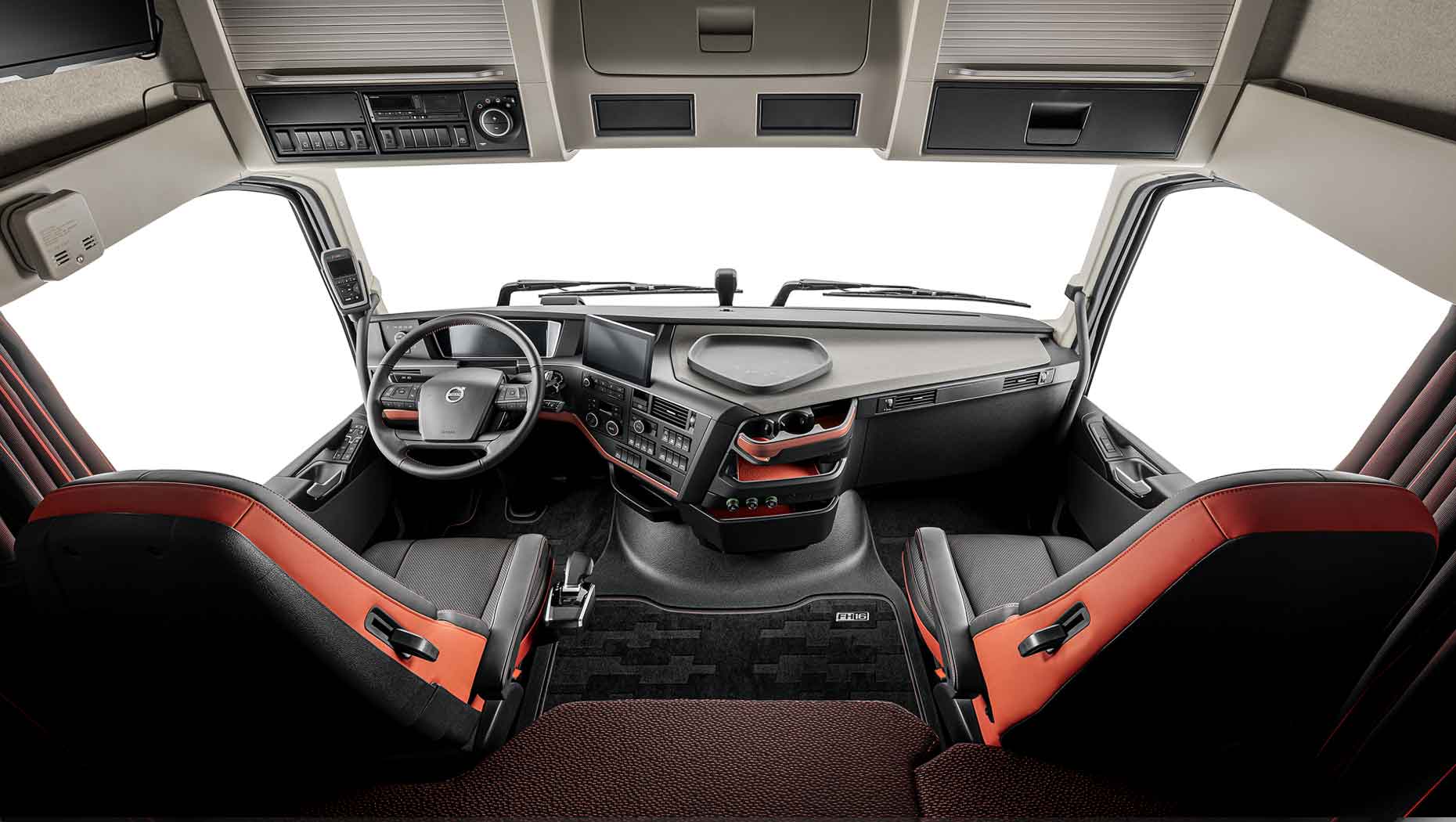
European drivers operate under a different rhythm. Routes are shorter. Rest regulations are strict. Drivers return home more frequently. The cab is optimized as a workspace — precise, ergonomic, efficient — rather than a substitute for home.
Engine Placement: A Subtle but Defining Choice

Engine placement tells the same story in mechanical terms.
In American conventional trucks, the engine sits ahead of the driver. That physical separation acts as insulation — against heat, noise, and vibration. Over ten or twelve hours of driving, that distance matters in ways that don’t show up on a spec sheet.
European cab-over designs place the engine beneath the cab to conserve space. Engineers compensate with insulation and clever packaging, but compactness always comes at a cost. The trade-off is accepted because the operating environment demands it.
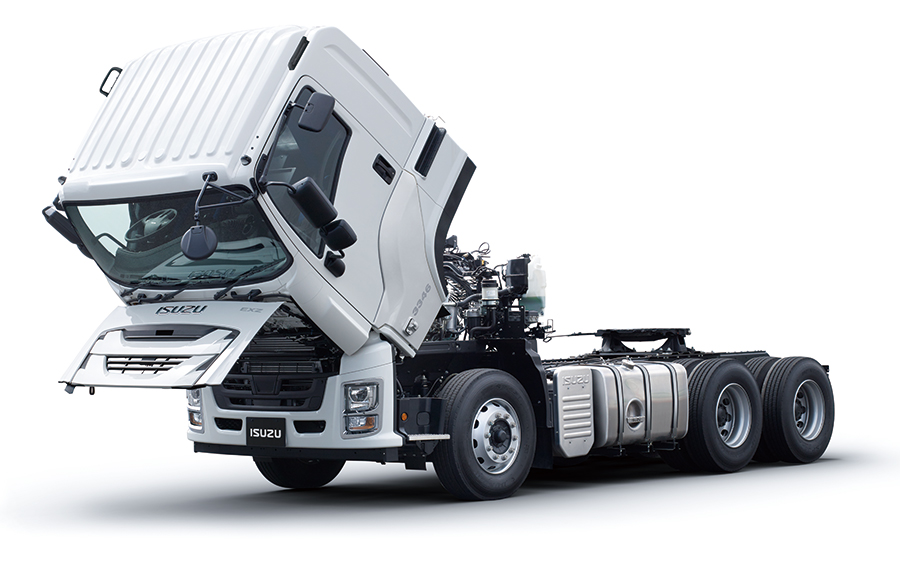
Maintenance philosophy follows suit.
One opens a hood.
The other tilts the entire cab.
Efficiency vs Endurance
European trucks prioritize aerodynamics and efficiency because fuel cost, emissions, and regulation demand it. American trucks, while increasingly aerodynamic, still prioritize stability and ride comfort over ultra-compact design.
Neither approach is inherently superior. Each reflects a rational response to different operating realities.
Culture Writes the Final Chapter

In America, trucks carry cultural weight. They symbolize independence, long roads, and self-reliance. Size and presence are part of that identity.
In Europe, trucks are instruments of precision — integrated into complex, highly regulated logistics networks. Efficiency is celebrated. Excess is questioned.
Design doesn’t just follow function.
It follows values.
When Design Stops Being a Choice
If you strip away the chrome, the regulations, and even the geography, what remains is something more fundamental: expectation.
American trucks were never asked to be compact. They were asked to endure. To move relentlessly across vast distances, often with the same driver living inside the machine for days at a time. Comfort, insulation, stability, and space didn’t emerge as luxuries — they emerged as requirements.
European trucks were never asked to dominate open highways. They were asked to fit. Into cities built long before trucks existed. Into regulations that treat every centimeter as valuable. Into logistics systems where efficiency is measured not in miles conquered, but in precision maintained.
Over time, those expectations hardened into design truths. Engines moved forward or downward. Cabins grew longer or tighter. Noise, heat, visibility, and maintenance were all negotiated differently — not because one continent was more inventive, but because each faced a different set of non-negotiables.
Seen this way, American and European trucks are not variations of the same idea. They are two separate answers to two separate realities.
Once you understand that, the contrast stops feeling intentional.
It stops feeling debated.
It simply feels… resolved.

