
The Meaning of an Icon - Jeep Wrangler
The Vehicle That Never Tried to Be Civilized

Some vehicles are designed to be improved.
Others are designed to be unchanged.
The Jeep Wrangler belongs firmly in the second category.
It is one of the rare automobiles whose identity was never shaped by market research, luxury trends, or comfort expectations. Instead, it was shaped by necessity, terrain, and a single, stubborn idea: a vehicle should go anywhere — even if it’s uncomfortable doing it.
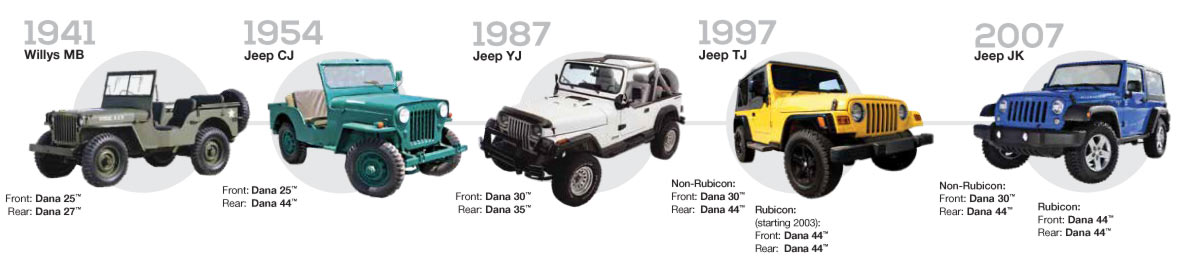
To understand the Wrangler, you have to go back to a time before SUVs, before lifestyle branding, before the idea that a car should flatter its driver.
Born from War, Not a Design Studio
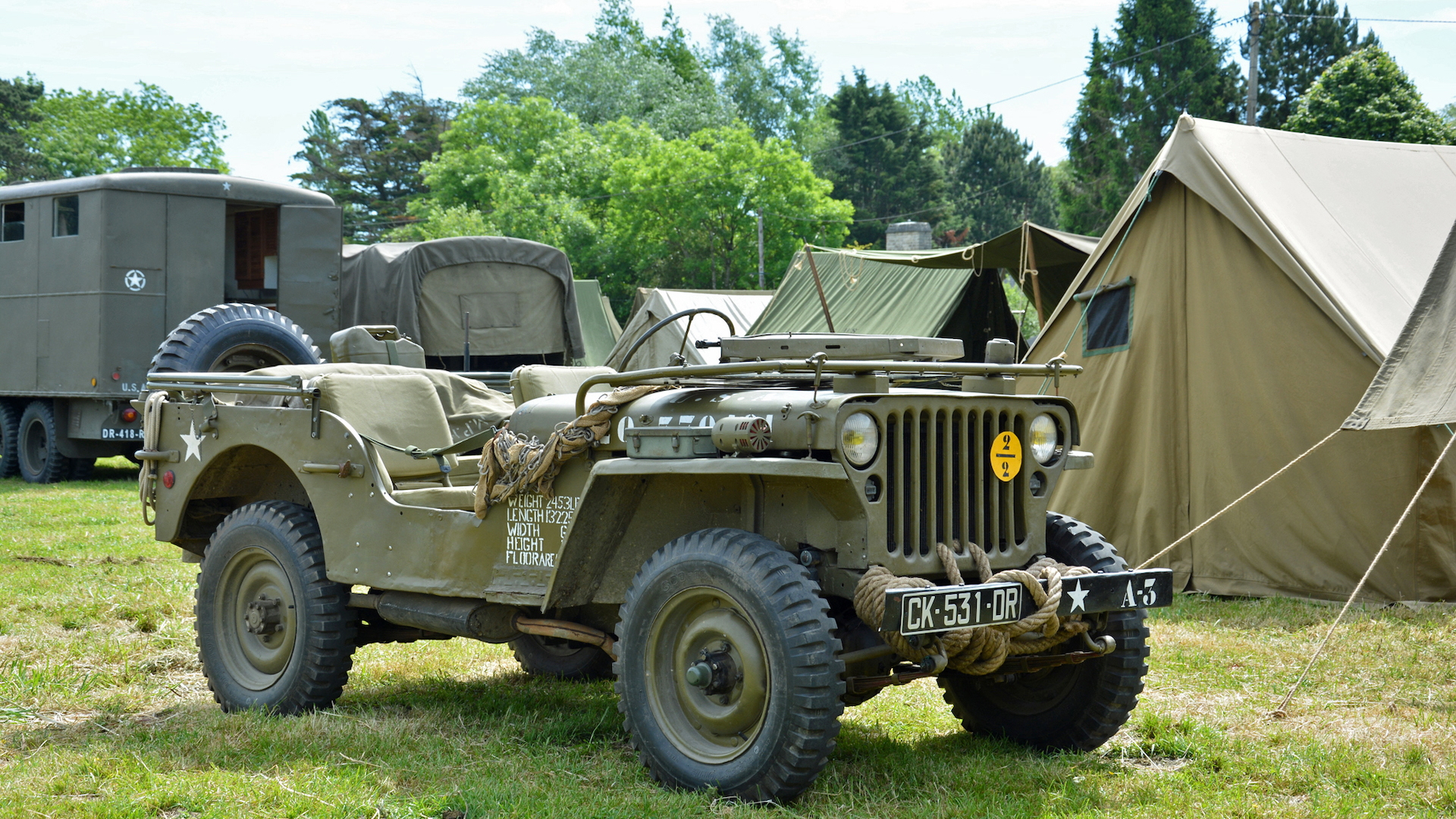
The Wrangler’s story begins in the early 1940s, when the U.S. military needed a light, simple, all-terrain vehicle — fast.
There was no time for refinement.
No room for elegance.
The result was the Willys MB: flat panels, exposed hardware, removable doors, and mechanical honesty. It was a tool, not a product. Soldiers didn’t admire it — they relied on it.
That DNA never disappeared.
When the war ended and civilian life resumed, the Jeep didn’t soften. It simply changed uniforms.
Civilian Life, Same Philosophy
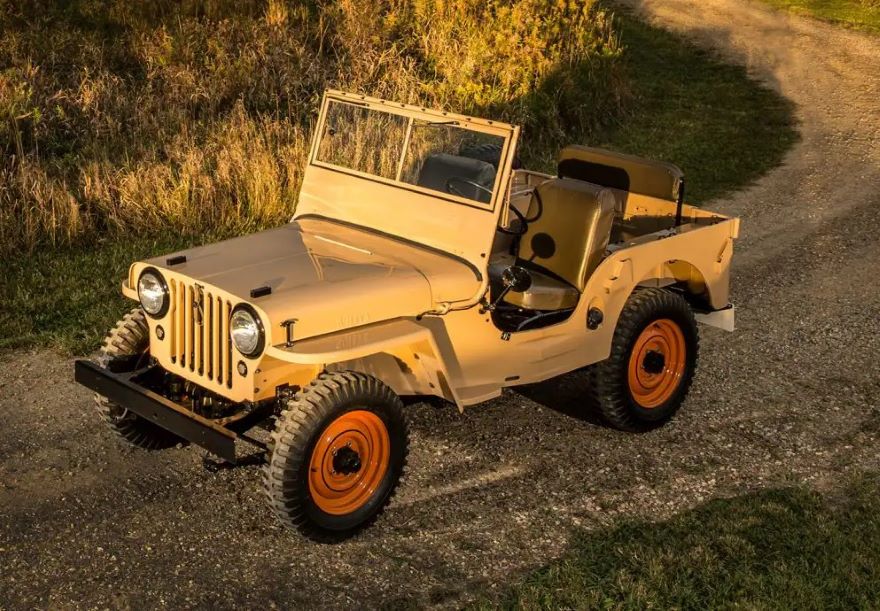
The CJ (Civilian Jeep) series carried the same principles into peacetime. Farmers used it. Builders abused it. Explorers trusted it.
There was no illusion that this was a “comfortable” car. The ride was harsh. The cabin was loud. Steering felt agricultural.
And none of that mattered.
Because the Jeep went where roads ended.
The Wrangler Name: A Promise, Not a Marketing Term

In 1987, the Wrangler name officially appeared. This wasn’t a reinvention — it was a declaration.
The Wrangler wasn’t trying to compete with emerging SUVs. It wasn’t chasing suburban approval. It doubled down on its roots.
Solid axles.
Body-on-frame construction.
Removable roof and doors.
Short overhangs.
Every decision favored capability over civility.
Even when square headlights briefly appeared in the YJ generation, purists complained — not because they changed performance, but because they violated identity.
That tells you everything.
Evolution Without Compromise

Over the decades, the Wrangler evolved — but only in ways that didn’t dilute its purpose.
-
Coil springs replaced leaf springs to improve articulation
-
Engines became more powerful and efficient
-
Safety systems were added
-
Interiors became slightly more humane
But the core never changed.
The Wrangler never pretended to be refined.
It only agreed to be slightly less punishing.
Even modern versions feel deliberately mechanical — as if reminding the driver that comfort was never the point.
Why the Wrangler Refuses to Become an SUV
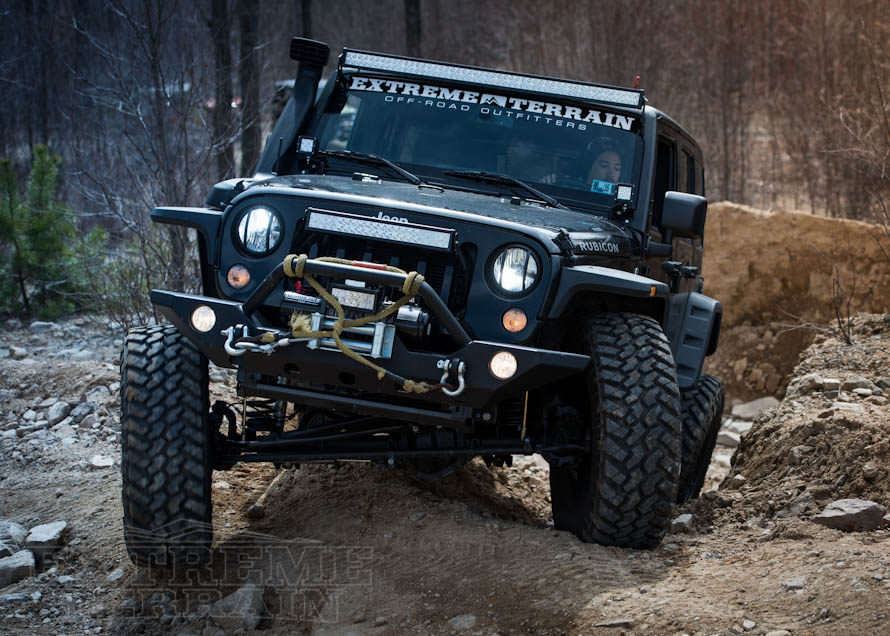
Most SUVs evolved by smoothing their edges. The Wrangler survived by sharpening them.
It retains:
-
Locking differentials
-
Low-range transfer cases
-
Exceptional approach and departure angles
-
Aftermarket compatibility unmatched by any competitor
This is a vehicle that expects modification. It invites it.
No other production vehicle encourages owners to take it apart so casually — remove doors, fold down the windshield, swap bumpers, change gearing.
The Wrangler isn’t finished when it leaves the factory.
It’s begun.
A Cultural Object, Not Just a Car
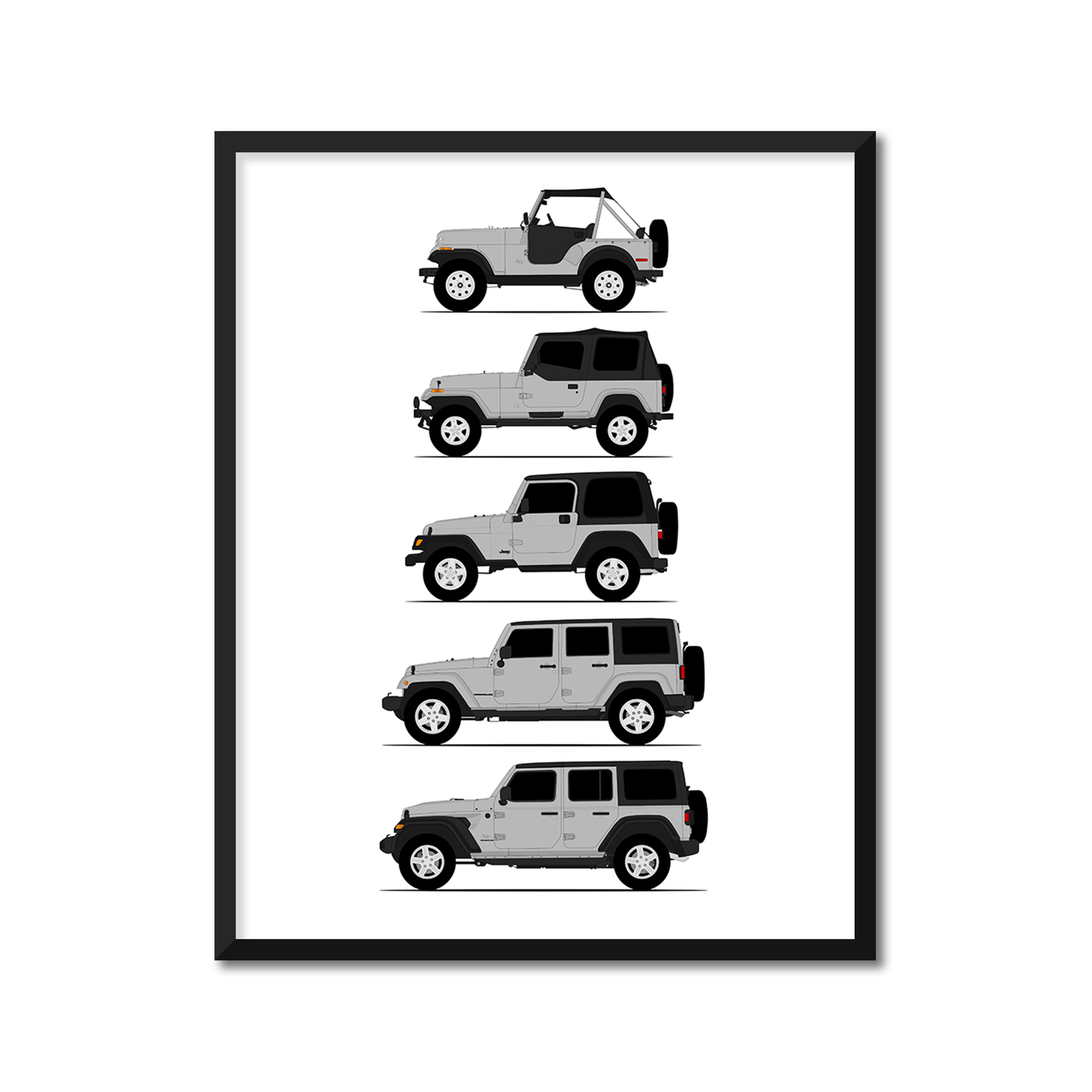
The Wrangler occupies a strange place in automotive culture.
It is:
-
Loud
-
Inefficient
-
Aerodynamically unapologetic
-
Objectively worse on highways than crossovers
And yet, it has a loyalty most brands can only envy.
Because it doesn’t apologize for what it is.
Driving a Wrangler isn’t about arriving comfortably. It’s about participating. Feeling terrain through the chassis. Accepting compromise in exchange for freedom.
Why the Wrangler Endures
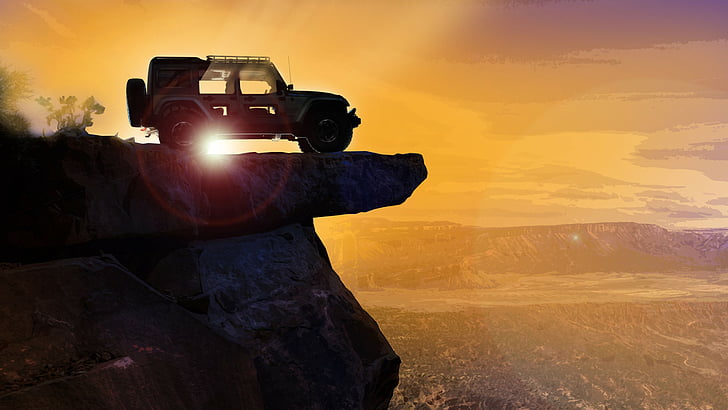
The Wrangler endures because it never tried to be everything.
It chose one job — and does it better than anything else.
In a world of softened edges and algorithm-approved vehicles, the Wrangler remains stubbornly analog. It doesn’t care if it’s fashionable. It cares if it can climb, crawl, and survive.
That’s why it outlived trends.
That’s why it ignores criticism.
That’s why it still exists.
The Meaning of an Icon
The Jeep Wrangler isn’t an SUV.
It’s not a luxury vehicle.
It’s not even especially practical.
It’s a reminder.
A reminder that vehicles once had singular purpose.
That engineering could outweigh comfort.
That some machines earn respect not by evolving — but by refusing to.
And that, more than anything else, is why the Wrangler isn’t just a car.
It’s an icon.
The Right Accessories Respect the Vehicle’s Philosophy
The Jeep Wrangler has never been about insulation from the environment.
It’s about exposure to it.
Open roofs.
Removable doors.
Sun, heat, dust, wind — all part of the experience.
But even vehicles built to embrace the outdoors still benefit from intentional protection, especially when they’re parked.
Wrangler owners know this better than anyone. Long days under direct sun don’t just heat the cabin — they punish dashboards, fade materials, and turn steering wheels into something you hesitate to touch. The same openness that makes the Wrangler special also makes it more vulnerable to heat when it’s standing still.
That’s where the right accessories matter.
Not decorative add-ons.
Not generic, one-size-fits-all solutions.
But accessories that respect the vehicle’s shape, purpose, and use.
Magnelex Windshield Sunshades are designed with that exact mindset. Built to match each vehicle’s windshield geometry — including the Wrangler’s upright, flat glass — they block solar heat at the source, before it floods the cabin.
For Wrangler owners, that means:
-
A cooler dashboard after hours in the sun
-
Less heat soak before starting the engine
-
Reduced interior material stress during peak summer months
-
A cabin that feels prepared, not punished
Most importantly, Magnelex sunshades don’t try to change what the Wrangler is.
They simply protect it during the moments when it isn’t moving — when even the toughest vehicles are most exposed.
The Jeep Wrangler earned its reputation on trails, rocks, and open terrain.
Protecting it when it rests is part of owning it responsibly.
Because icons aren’t just driven.
They’re preserved.

