
Tesla: The Company That Forced the Auto Industry to Rethink Everything
How One Company Changed the Course of Electric Vehicles — and the Modern Automobile

Electric vehicles did not begin with Tesla. Long before the company existed, electric propulsion had already appeared, disappeared, and reappeared in automotive history. What Tesla changed was not the existence of electric cars, but their meaning.
For decades, electric vehicles were treated as side projects — designed around limitations rather than ambition. Tesla reversed that logic. Instead of asking how to make electric cars acceptable, it asked how to make them undeniably better.
That distinction reshaped the industry.
Before Tesla: Electric Cars as Compromise
Prior to Tesla, modern electric vehicles were largely built to satisfy regulations. They emphasized efficiency over emotion, restraint over performance, and environmental responsibility over desirability. Range was short, acceleration modest, and design intentionally conservative.
They worked — but they did not inspire.
Automakers assumed consumers would only accept electric cars if they were willing to give something up. Tesla questioned that assumption entirely.
Tesla’s Foundational Shift: Reframing the Problem
Tesla’s core insight was simple but disruptive:
an electric car should not feel like a sacrifice.
This philosophy shaped every decision that followed. Performance would matter. Design would matter. Software would matter. Ownership would evolve.
Electric propulsion was treated not as a constraint, but as an advantage.
Tesla Roadster (2008): Proof, Not Volume

The original Tesla Roadster was never intended to be a mass-market car. It was a proof of concept. Built on a lightweight sports car platform, it demonstrated that lithium-ion batteries could deliver both range and performance.
The Roadster’s significance lies less in its sales numbers and more in its message: electric cars could be fast, desirable, and emotionally engaging. This was the moment electric propulsion escaped its apologetic phase.
Model S (2012): Redefining the Premium Sedan

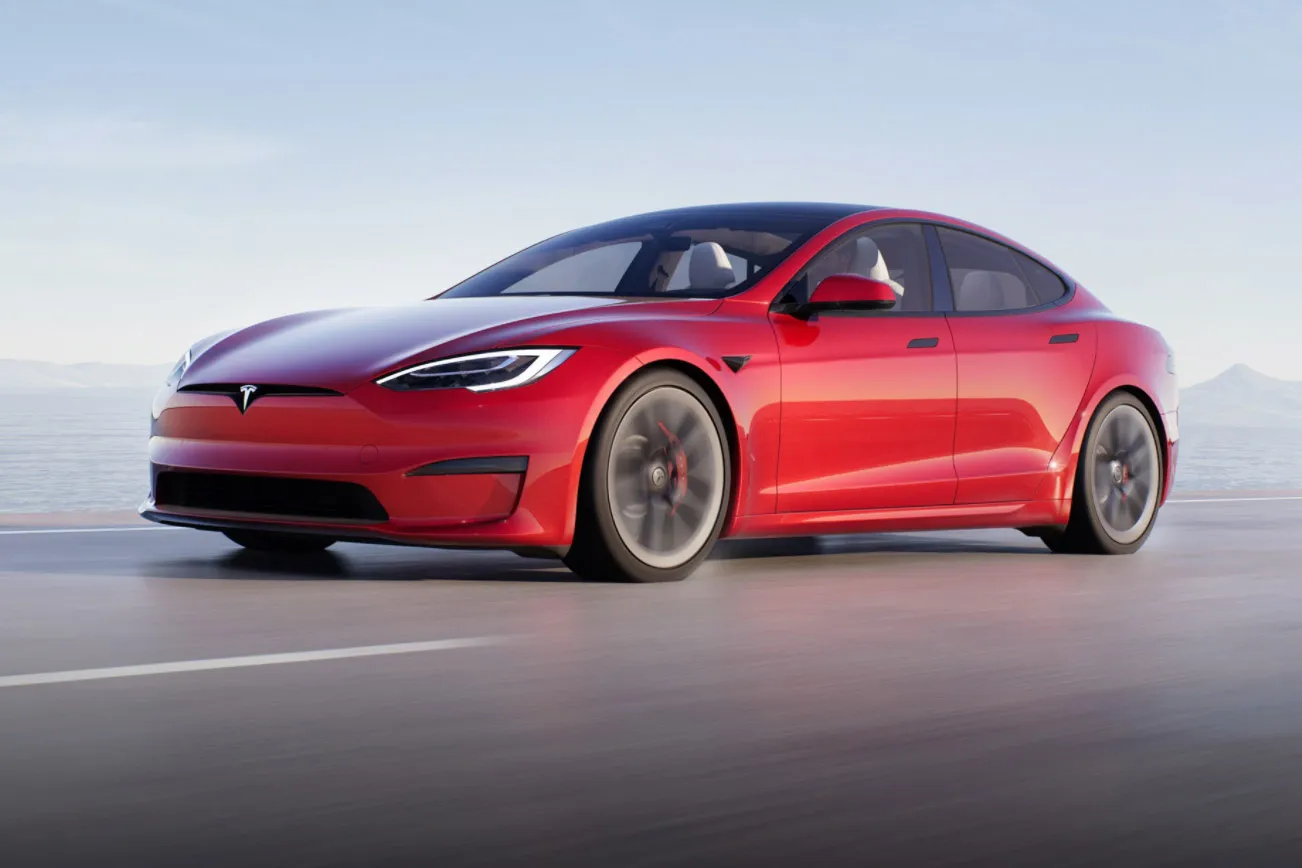
The Model S marked Tesla’s true arrival. Unlike earlier EVs, it was designed from the ground up as an electric vehicle. The flat battery pack enabled a low center of gravity, exceptional handling stability, and unprecedented interior space.
More importantly, the Model S introduced software as a core component of the vehicle experience. Over-the-air updates improved performance, refined interfaces, and added features long after purchase.
For the first time, a production car behaved like a platform — not a finished object.
Model X (2015): Engineering Ambition Over Caution

The Model X expanded Tesla’s approach into the SUV category. Its falcon-wing doors, panoramic windshield, and complex packaging made it one of the most ambitious electric vehicles ever produced.
While controversial, the Model X demonstrated Tesla’s willingness to push engineering boundaries rather than simplify for convenience. It reinforced the idea that electric vehicles did not need to follow conservative design rules.
Model 3 (2017): Scaling Without Dilution

The Model 3 was Tesla’s most critical test. It needed to deliver electric driving to a broader audience without abandoning the principles established by the Model S.
Minimalism became functional rather than symbolic. The single-screen interior reduced part complexity and manufacturing friction. Performance remained competitive. Software remained central.
With the Model 3, Tesla proved that electrification could scale — not as a niche, but as a replacement.
Model Y (2020): The Electric Default Vehicle

The Model Y represents Tesla’s most mature expression. Built on the Model 3 platform, it combines efficiency with practicality, space, and range.
Its importance lies in normalcy. The Model Y is not positioned as an experiment or a statement. It is simply the logical choice for many buyers. That quiet acceptance marks the point at which electric vehicles stop being “the future” and become the present.
Here’s a custom-fit windshield sunshade designed specifically for the Model Y.
The panoramic glass roof defines the Model Y’s open, airy feel, but it comes from the factory without a roof shade. Over time, this can increase cabin heat under direct sunlight. A custom-fit roof shade helps maintain a cooler, more comfortable interior.
Here’s your custom-fit roof shade for the Model Y.
Cybertruck (2023– ): When Tesla Chose to Break the Mold Entirely
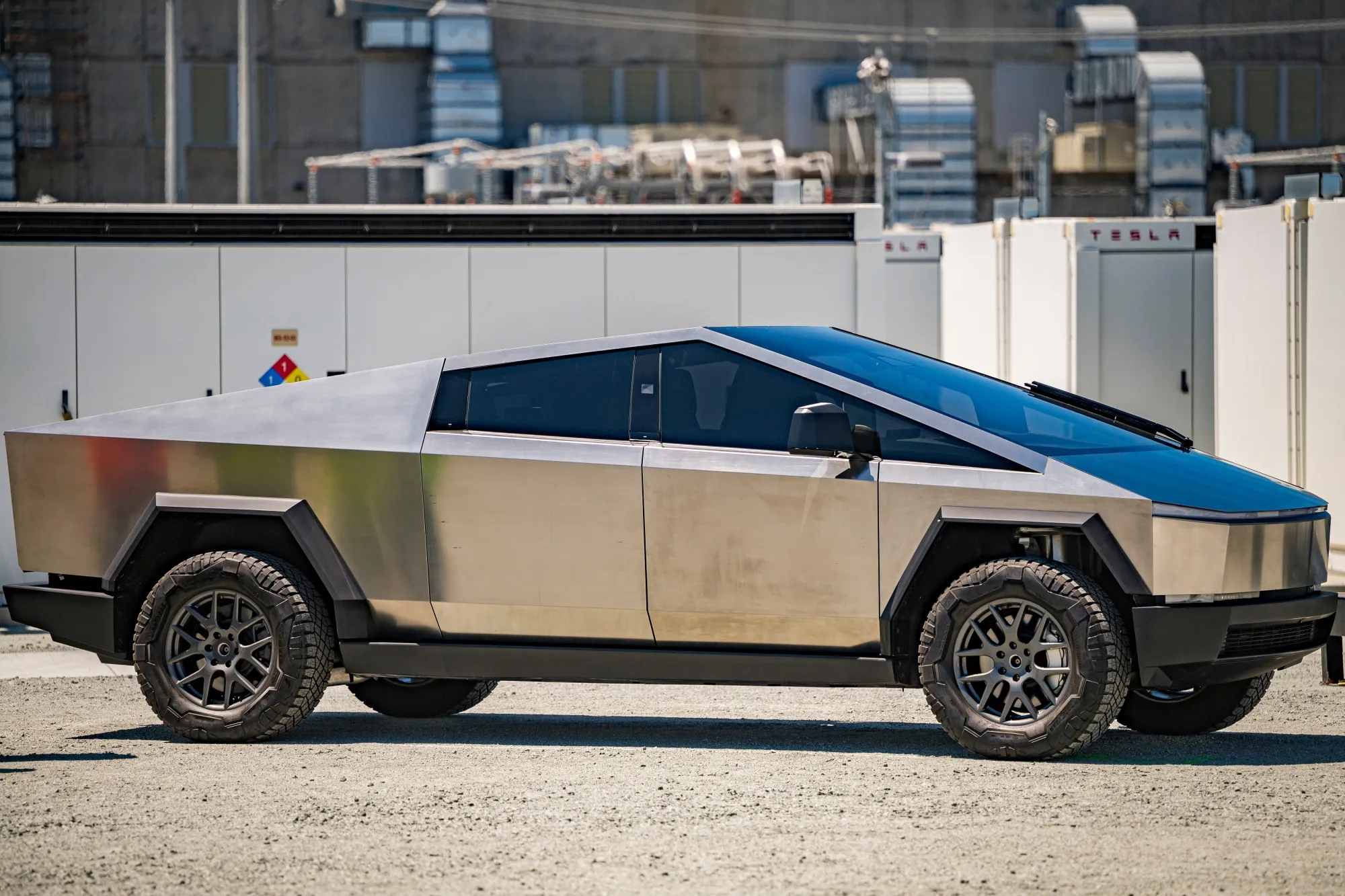
If earlier Tesla models challenged expectations quietly, the Cybertruck did the opposite. It arrived without subtlety, without compromise, and without any attempt to fit into existing automotive categories.
The Cybertruck is not a pickup designed to compete politely with other trucks. It is a rejection of the idea that vehicles must follow familiar shapes, materials, or proportions to be functional.
Its stainless steel exoskeleton is not a styling exercise. It eliminates traditional painted body panels, reduces dent susceptibility, and shifts structural strength outward rather than hiding it beneath cosmetic layers. The result is a vehicle that looks unfinished to some — and brutally honest to others.
This approach reflects Tesla’s broader philosophy: remove what isn’t necessary, even if people are uncomfortable with the result.
A Pickup Reimagined Through First Principles

Traditional pickups evolved gradually, bound by decades of design language and customer expectations. Tesla ignored that lineage entirely.
Instead, Cybertruck was engineered from first principles:
-
Electric torque made traditional drivetrain layouts obsolete
-
Battery mass lowered the center of gravity despite the truck’s size
-
Software defined capability rather than mechanical complexity
Performance figures that would once have seemed absurd for a pickup — acceleration, payload, towing — became achievable because the platform itself was no longer constrained by combustion-era assumptions.
Cybertruck is less a “truck” in the historical sense and more a utility platform designed for a future where electric power is the default.
Cultural Shock Was the Point
Cybertruck’s polarizing reception was not a miscalculation. It was the strategy.
Tesla understood that incremental change would only invite comparison. Radical change forces reconsideration. By creating something visually impossible to ignore, Tesla ensured that every discussion about trucks, durability, materials, and design would include Cybertruck — whether critics wanted it to or not.
In that sense, Cybertruck functions as a concept car that escaped into production.
Where Cybertruck Fits in Tesla’s Story
Roadster proved electric performance was possible.
Model S proved electric luxury was viable.
Model 3 proved electric scale could work.
Model Y proved electric cars could become default choices.
Cybertruck proves that Tesla is willing to abandon tradition entirely when it believes tradition is the problem.
It doesn’t exist to please everyone.
It exists to redraw boundaries.
Tesla’s Difference, Clearly Stated
Tesla did not invent electric cars.
It did not invent batteries.
It did not invent software.
What it did was integrate them into a single, coherent system, designed to evolve over time. Vertical integration, software-first architecture, and control over charging infrastructure allowed Tesla to move faster than competitors bound by legacy structures.
The result was not just new cars, but new expectations.
Ownership in the Real World: Heat, Glass, and Longevity
Tesla vehicles emphasize openness through expansive glass areas and clean design. While visually striking, this architecture increases exposure to solar heat, particularly when parked.
Heat management becomes critical not only for comfort, but for long-term material preservation, cabin efficiency, and reduced strain on climate systems.
This is where thoughtful accessories matter.
A custom-fit windshield sunshade is a functional necessity for Tesla ownership, not a cosmetic addition. By blocking heat at the primary entry point, it stabilizes cabin temperatures and supports the vehicle’s thermal systems.
Magnelex Windshield Sunshades are engineered specifically for Tesla windshield geometries, ensuring full coverage and effective heat reduction. Like Tesla’s own design philosophy, they focus on prevention rather than correction.
Final Perspective
Tesla’s legacy is not confined to any single model. It lies in how the company redefined what electric vehicles could be — and forced the industry to follow.
Model by model, Tesla transformed electric cars from compromises into benchmarks. Today, the question is no longer whether electric vehicles will dominate, but how quickly the rest of the industry can adapt to a future Tesla helped accelerate.
Electric cars existed before Tesla.
After Tesla, they became inevitable.

