
Your Tires Change With the Season — Whether You Do or Not
Why Seasonal Performance Is About More Than Just Rubber — and Why Summer Protection Matters

Most drivers treat seasonal tire changes as a checklist item. Winter ends, summer begins, tires are swapped — and the conversation stops there.
In reality, tires are only the most visible response to seasonal change. Temperature affects everything a vehicle touches: the road, the air, the materials inside the cabin, and even how long those materials last.
Understanding the difference between summer and winter tires is the starting point — not the conclusion.
Rubber Chemistry: Where the Difference Really Begins
The defining difference between summer and winter tires isn’t the tread pattern — it’s the rubber compound.
-
Summer tires use firmer compounds designed to stay stable in heat
-
Winter tires use softer compounds designed to remain flexible in cold
When temperatures drop below ~45°F (7°C), summer tire rubber begins to harden. Grip decreases not gradually, but rapidly. Winter tires, by contrast, maintain elasticity — allowing the tread to deform and bite into snow and ice.
Heat flips the equation.
At high road temperatures, winter tires become too soft, reducing steering precision, increasing tread wear, and lengthening braking distances.
Braking Distance: Where Data Replaces Opinion
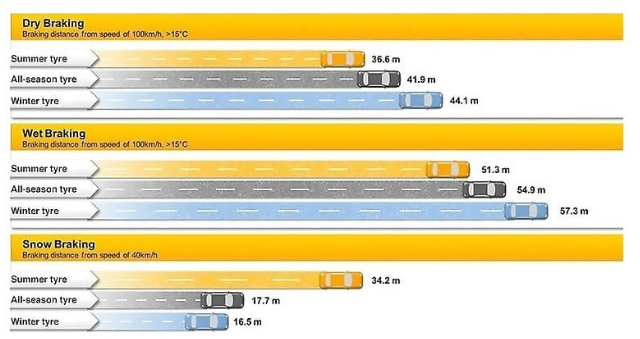
Independent tire tests consistently show how dramatic the difference can be.
On dry summer asphalt (around 86°F / 30°C):
-
Summer tires can stop 20–25 feet shorter from highway speeds than winter tires
-
Steering response remains predictable under load
On snow-covered or icy roads:
-
Winter tires can reduce braking distance by 30–40% compared to summer tires
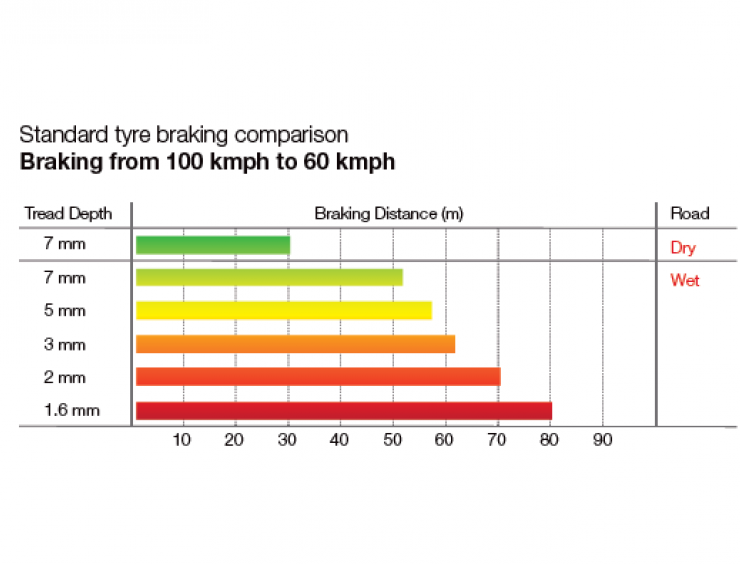
These aren’t marginal gains. They’re the difference between controlled stops and unavoidable impacts.
Seasonal tires aren’t about preference.
They’re about physics.
Road Temperature vs Air Temperature

One of the most misunderstood aspects of summer driving is how hot roads actually get.
While air temperature might read 90°F (32°C), asphalt temperatures can exceed:
-
140–150°F (60–65°C) in direct sunlight
Tires are engineered with this in mind. Summer tires dissipate heat more effectively and maintain structural stability under these conditions.
But the road isn’t the only surface absorbing heat.
Seasonal Stress Is a System, Not a Single Component
Smart seasonal preparation treats the vehicle as a system.
-
Winter focuses on traction, visibility, and cold resilience
-
Summer focuses on heat management, material protection, and longevity
Changing tires prepares the car for motion.
Managing heat prepares the car for time.
The Full Seasonal Picture
Summer tires are not a luxury.
Winter tires are not optional.
And summer protection doesn’t stop at the wheel wells.
Drivers who understand seasonal performance don’t just adapt how their car drives — they adapt how their car ages.
Grip matters.
Heat matters.
Preparation matters.
And the best protection always starts before damage begins.
A Final Summer Reminder: Tires Prepare the Car to Move — Heat Protection Prepares It to Last
Seasonal preparation doesn’t end when the tires are mounted.
Summer tires solve one problem exceptionally well:
how the car behaves while it’s moving on hot asphalt.
But summer places stress on a vehicle even when it’s standing still.
The same heat that softens asphalt and challenges tire compounds also builds up inside the cabin — through glass, dashboards, steering wheels, and interior materials. Over time, this heat accelerates wear, fades surfaces, and increases the load on climate systems before the car even starts rolling.
That’s why experienced drivers think about summer preparation in layers.
Using a windshield sunshade isn’t about comfort alone — it’s about controlling heat at the source.
A well-designed, vehicle-specific sunshade helps:
-
Limit extreme dashboard and steering wheel temperatures
-
Reduce interior heat buildup during long parking periods
-
Lower initial A/C strain when restarting the car
-
Slow long-term material aging caused by UV exposure
Generic sunshades often leave gaps, allowing heat to leak in around the edges. Custom-fit solutions, like Magnelex Windshield Sunshades, are designed to match each vehicle’s windshield geometry — minimizing those gaps and improving overall thermal coverage.
Generic sunshades often leave gaps, allowing sunlight to leak in around the edges. Custom-fit designs, like Magnelex Windshield Sunshades, are engineered to match each vehicle’s windshield geometry — minimizing heat entry where it matters most.
Built with high-grade reflective materials, Magnelex sunshades function as a passive thermal barrier, complementing summer tires in the same way winter tires complement cold-weather driving.
Tires Protect Control. Sunshades Protect Everything Else.

Seasonal preparation works best when each component plays its role.
-
Tires manage how the car interacts with the road
-
Sunshades manage how the car interacts with the sun
Both are preventative.
Both extend safety and longevity.
Neither is reactive.

